
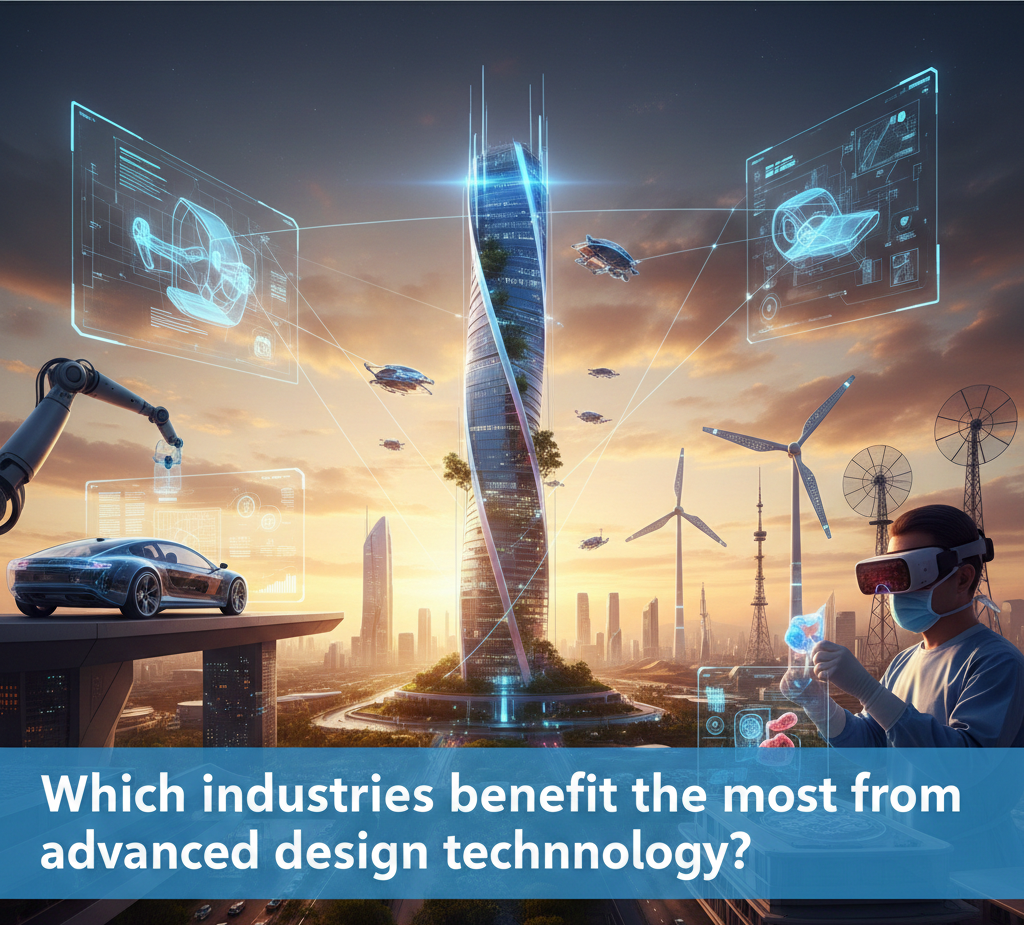
Introduction:
In this article, I’ll explore the transformative impact of advanced design technology on various industries, shedding light on those that stand to benefit the most from these technological advancements. Over the past few decades, design technology has evolved at an unprecedented pace, revolutionizing the way products are conceived, developed, and brought to market. It has empowered designers and engineers with innovative tools and capabilities, allowing them to push the boundaries of creativity and efficiency.
While the benefits are widespread, some industries have embraced these advancements more vigorously than others, unlocking new possibilities and improving their competitive edge. By delving into these sectors, we can gain valuable insights into the profound changes advanced design technology has catalyzed, and how these changes are reshaping not only product design but also the entire landscape of contemporary industry.
Automotive Manufacturing:
The automotive manufacturing industry has been significantly transformed by advanced design technology. Computer-aided design (CAD) and computer-aided engineering (CAE) tools have revolutionized the way vehicles are designed and produced. These technologies enable manufacturers to create highly detailed 3D models of car components, test their performance in various conditions, and streamline the manufacturing process. Through virtual prototyping and simulation, automotive companies can assess the safety, performance, and fuel efficiency of their vehicles, reducing the need for physical prototypes and saving both time and resources.
Furthermore, advanced design technology has paved the way for the development of electric and autonomous vehicles. These innovations rely heavily on intricate software and hardware design, which is made possible through cutting-edge technologies. As a result, the automotive industry can introduce new, environmentally friendly, and technologically advanced vehicles to the market, meeting the evolving demands of consumers and regulatory requirements.
Additionally, augmented reality (AR) and virtual reality (VR) technologies play a significant role in the design and sales process, allowing customers to visualize and personalize their vehicles, making the buying experience more engaging and efficient. The integration of advanced design technology in the automotive sector has not only enhanced the quality and safety of vehicles but also fostered innovation and improved customer engagement.
Aerospace and Aviation:
The aerospace and aviation industry is another sector that has reaped substantial benefits from advanced design technology. These technologies have allowed for the design and development of aircraft that are safer, more efficient, and environmentally friendly. For instance, the use of high-fidelity simulations and advanced materials has led to aircraft designs that are optimized for aerodynamics and fuel efficiency, ultimately reducing the carbon footprint of the aviation sector.
In the design of aircraft, CAD and CAE tools are pivotal, enabling engineers to create intricate models and simulate various operational scenarios. This approach significantly reduces the need for costly physical prototypes and extensive testing, saving both time and resources. Moreover, advanced design technology is central to the development of unmanned aerial vehicles (UAVs) and space exploration equipment, driving innovation and expanding the industry’s horizons.
The integration of artificial intelligence (AI) and machine learning has also improved maintenance and safety in aviation. Predictive maintenance, for example, utilizes data analysis to identify potential issues before they become critical, reducing the risk of accidents and costly downtime. The aerospace and aviation industry stands as a prime example of how advanced design technology can revolutionize an entire sector, leading to safer and more efficient air travel.
Architecture and Construction:
The architecture and construction industry has experienced a profound transformation due to advanced design technology. With the advent of Building Information Modeling (BIM), architects, engineers, and construction professionals can create highly detailed, 3D models of buildings and infrastructure projects. These models contain not only visual representations but also crucial data about the materials, systems, and components, enabling stakeholders to collaborate more effectively, reduce errors, and make informed decisions throughout the project lifecycle.
BIM streamlines the design process by allowing architects and engineers to identify potential issues and conflicts in the early stages of a project. This leads to improved efficiency, cost savings, and better project outcomes. Furthermore, it facilitates sustainability and energy efficiency by analyzing the environmental impact of design decisions and optimizing the use of resources.
In addition to BIM, augmented reality (AR) and virtual reality (VR) technologies have enhanced the presentation and communication of architectural designs. These technologies allow clients and stakeholders to experience a building or space in a more immersive way, aiding in design approvals and understanding the final product. Overall, advanced design technology has brought about a paradigm shift in the architecture and construction industry, promoting collaboration, efficiency, and sustainability in the built environment.
Healthcare and Medical Devices:
Advanced design technology has been a game-changer in the healthcare and medical devices sector. It has enabled the development of more precise and efficient medical equipment, from diagnostic tools to surgical instruments. Computer-aided design (CAD) and simulation software play a crucial role in creating intricate, patient-specific medical devices and prosthetics. This technology allows for the customization of devices to individual patient needs, enhancing treatment outcomes and patient comfort.
3D printing, often coupled with advanced design technology, has revolutionized the production of medical devices. Custom implants, prosthetics, and even organ models can be rapidly manufactured with high precision. Additionally, these technologies support the creation of sophisticated medical simulations that enable training for medical professionals, improving their skills and patient care.
Furthermore, advanced design technology contributes to telemedicine by allowing the development of remote monitoring devices and telehealth platforms. These innovations are transforming the way healthcare services are delivered and making medical care more accessible and convenient for patients, especially in remote or underserved areas. In the healthcare sector, advanced design technology continues to drive innovation, personalization, and improved patient outcomes.
Electronics and Consumer Tech:
The electronics and consumer tech industry have benefited immensely from advanced design technology, leading to a continuous stream of innovative products. The design and development of smaller, more powerful, and energy-efficient devices are made possible through computer-aided design (CAD) and simulation software. Engineers can create complex circuitry, optimize form factors, and test the performance of electronic components in a virtual environment, reducing the time to market.
Additionally, the miniaturization and integration of electronic components have been accelerated by advanced design technology, enabling the creation of wearables, smart devices, and Internet of Things (IoT) products. These innovations have transformed the way people interact with technology and have revolutionized various industries, including healthcare, transportation, and home automation.
Advanced design technology has also played a vital role in the development of displays, touchscreens, and user interfaces, making electronic devices more user-friendly and appealing. Moreover, virtual reality (VR) and augmented reality (AR) technologies have broadened consumer experiences, whether for gaming, entertainment, or education, and have become integral to the design of the next generation of tech gadgets.
Fashion and Apparel:
The fashion and apparel industry has undergone a significant transformation thanks to advanced design technology. The integration of computer-aided design (CAD) software has made the design process more efficient and sustainable. Designers can create and manipulate intricate patterns, textures, and colors in a digital environment, reducing waste associated with traditional paper-based design methods.
Advanced design technology has also led to the development of 3D modeling and visualization tools, allowing designers to create realistic 3D representations of clothing. This not only helps in the design phase but also aids in marketing and e-commerce, as customers can visualize and customize their clothing choices more accurately.
Moreover, the fashion industry has embraced advanced technology in the production process through automation and robotics. These technologies have improved the efficiency of garment manufacturing, enabling faster production cycles and the creation of sustainable, on-demand fashion. As sustainability becomes a central concern in the industry, advanced design technology is driving innovations in eco-friendly materials, supply chain management, and the reduction of textile waste.
Gaming and Entertainment:
The gaming and entertainment industry has been at the forefront of embracing advanced design technology to create immersive and captivating experiences. The development of cutting-edge video games, virtual reality (VR) experiences, and special effects in movies relies heavily on advanced design technology.
Computer-aided design (CAD) and 3D modeling are fundamental to the creation of realistic game environments, characters, and assets. These technologies enable game developers to visualize and manipulate their creations before bringing them to life. The simulation and physics engines used in games are also products of advanced design technology, providing realistic interactions and environments for players.
Virtual reality (VR) and augmented reality (AR) have brought a new level of immersion to the gaming and entertainment world. These technologies allow users to step into virtual worlds, interact with digital elements, and enhance the storytelling experience. VR, in particular, is revolutionizing gaming, training simulations, and experiential marketing.
Furthermore, advanced design technology is integral to the creation of high-quality animation and special effects in the film and television industry. From motion capture to realistic CGI (computer-generated imagery), it allows for the seamless integration of digital elements into live-action scenes, leading to visually stunning and captivating entertainment.
Industrial Machinery and Equipment:
The industrial machinery and equipment sector has seen significant benefits from advanced design technology. These technologies are central to the design, development, and optimization of complex machinery, ranging from manufacturing equipment to construction machinery.
Computer-aided design (CAD) and computer-aided engineering (CAE) tools have revolutionized the design process, enabling engineers to create detailed 3D models and simulate the performance of machinery in various operational scenarios. This approach reduces the need for physical prototypes and costly testing, resulting in more efficient and cost-effective machinery design.
The integration of sensors, the Internet of Things (IoT), and data analytics has further enhanced the efficiency and maintenance of industrial equipment. Predictive maintenance, for example, uses real-time data to predict and prevent machinery breakdowns, reducing downtime and increasing productivity. Advanced design technology has also been instrumental in the development of automated and robotic machinery, improving manufacturing processes and safety.
Conclusion:
I hope this exploration of industries benefiting from advanced design technology has shed light on the transformative power of these innovations. In conclusion, it’s evident that advanced design technology has become a driving force across a wide spectrum of sectors, propelling them into the future. From automotive manufacturing to aerospace, architecture to healthcare, electronics to fashion, gaming to industrial machinery, these industries have harnessed the capabilities of advanced design technology to enhance efficiency, sustainability, and innovation.
These advancements not only yield economic benefits but also contribute to improved safety, user experience, and environmental impact. As we look ahead, it’s clear that these industries will continue to evolve, adapting to new technological breakthroughs, and pushing the boundaries of what’s possible. In doing so, they will not only meet the ever-changing demands of consumers but also play a pivotal role in shaping a more advanced, interconnected, and dynamic world. Advanced design technology will remain an essential catalyst for progress, continually transforming how we live, work, and experience the world around us.