
Introduction:
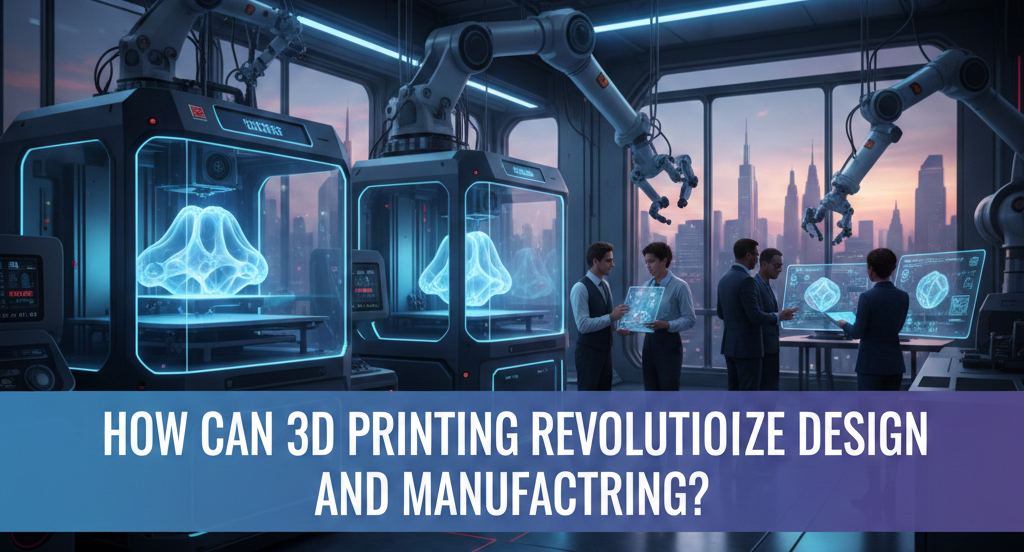
In this article, I’ll explore the transformative potential of 3D printing in the realms of design and manufacturing. Three-dimensional printing, often referred to as additive manufacturing, has emerged as a groundbreaking technology with the capacity to reshape the way we conceive, create, and produce objects. This innovative technique goes beyond traditional manufacturing methods by allowing for the layer-by-layer construction of intricate, customized, and complex structures.
From aerospace components and medical implants to bespoke consumer products, 3D printing offers a range of applications that transcend the limitations of traditional manufacturing processes. As we delve into this topic, we will unravel how 3D printing is disrupting the status quo, offering new levels of efficiency, cost-effectiveness, and creative freedom to designers and manufacturers alike. Join me on this exploration of a revolution that promises to redefine the very essence of design and manufacturing.
Customization and Personalization:
Customization is one of the most significant advantages of 3D printing. Traditional manufacturing processes often involve creating molds, dies, or templates, which can be costly and time-consuming. In contrast, 3D printing allows for the production of bespoke items with ease. Whether it’s personalized prosthetics that perfectly fit an individual’s anatomy or custom-designed consumer products, 3D printing empowers manufacturers and designers to cater to specific, unique needs. This level of personalization not only enhances user satisfaction but also opens up new business models based on individualized products.
Additionally, 3D printing enables on-demand manufacturing, reducing the need for large inventories of pre-fabricated items. This further allows for just-in-time production, significantly minimizing the wastage of unsold or outdated stock. The ability to tailor products to individual preferences and requirements is a game-changer, providing consumers with more choices and companies with a competitive edge.
Furthermore, personalization extends beyond consumer goods. In industries like healthcare, 3D printing is used to create patient-specific medical implants and devices. This tailored approach not only improves patient outcomes but also showcases the potential of 3D printing to transform entire sectors through customized solutions.
Rapid Prototyping and Iteration:
3D printing is a vital tool for rapid prototyping and iterative design. In traditional manufacturing, creating prototypes or product iterations can be time-consuming and expensive. With 3D printing, designers and engineers can quickly turn concepts into physical models. This speed of development allows for more thorough testing, reducing the time from design to market. Iterations and adjustments can be made swiftly, leading to more refined and optimized final products.
The ability to experiment with different designs and materials early in the development process significantly enhances creativity and innovation. This agile approach is particularly valuable in industries where time-to-market is critical, such as the automotive and aerospace sectors. Manufacturers can detect and rectify flaws in the design before investing in expensive mass production, ultimately saving both time and resources.
In essence, 3D printing facilitates a design-thinking approach, where trial and error are encouraged. It promotes a culture of innovation and risk-taking, as the cost of experimenting and failing is significantly reduced.
Complex Geometries Made Feasible:
Traditional manufacturing methods often struggle with the production of intricate, complex, or highly detailed shapes. 3D printing, however, excels in this regard. It allows for the creation of components and objects with geometries that would be impractical or impossible to achieve using conventional techniques.
The additive nature of 3D printing means that it builds objects layer by layer, enabling designers to create structures with internal voids, lattices, and other intricate features. This capability has far-reaching implications. In aerospace, for example, it enables the construction of lightweight but robust parts, reducing the weight and fuel consumption of aircraft. In architecture, it allows for the development of complex, one-of-a-kind building components. In healthcare, it permits the fabrication of porous structures for bone implants, facilitating tissue ingrowth and healing.
The ability to manufacture complex geometries not only enhances the functionality and aesthetics of products but also challenges traditional design constraints. It opens doors to innovative solutions that can redefine entire industries.
Reduced Material Waste:
Traditional subtractive manufacturing processes often generate significant material waste, as they involve cutting, milling, or shaping materials into the desired forms. In contrast, 3D printing is an additive process, where material is deposited layer by layer to create the final product. This additive nature dramatically reduces material waste, making it an environmentally friendly option.
With traditional manufacturing, excess material is often discarded as scraps or requires recycling, which can be costly and energy-intensive. 3D printing reduces these waste streams, making it more sustainable and resource-efficient. Additionally, 3D printers can use a range of materials, including recycled or biodegradable plastics, further minimizing the environmental impact.
The reduction in material waste not only aligns with sustainability goals but also results in cost savings, as less raw material is required to produce the same or even more complex parts.
Supply Chain Simplification:
3D printing has the potential to streamline supply chains significantly. Traditional manufacturing often involves a complex network of suppliers, distributors, and warehouses to transport raw materials and finished products. 3D printing, however, can bring production closer to the end-users, reducing the need for extensive logistics and supply chain infrastructure.
Through distributed manufacturing, companies can produce items on-site or near their customers, minimizing transportation costs and lead times. This is especially advantageous in the fast-paced world of e-commerce, where customers expect quick deliveries and customized products. Companies can maintain digital inventories of designs and manufacture products as orders are received, thus minimizing the risk of overproduction and reducing the need for large storage facilities.
The simplification of supply chains also enhances resilience. 3D printing can be used to produce critical components on-demand, reducing dependence on distant suppliers and safeguarding against disruptions in the global supply chain.
Cost-Effective Low-Volume Production:
One of the key advantages of 3D printing is its suitability for low-volume or small-batch production. Traditional manufacturing methods often involve significant setup costs, making them most economical for mass production. In contrast, 3D printing offers a cost-effective solution for producing limited quantities of items.
This is particularly beneficial for businesses that cater to niche markets, offer personalized products, or produce prototypes and one-of-a-kind items. For example, jewelry designers can produce custom pieces in small quantities without the need for expensive molds or tooling. Additionally, spare parts and replacements for machinery and equipment can be produced as needed, eliminating the need for costly inventory stockpiles.
The cost-effectiveness of low-volume production is a boon for small and medium-sized enterprises, startups, and entrepreneurs, enabling them to compete with larger counterparts and reducing barriers to entry in various industries.
Accessibility and Democratization:
3D printing has made manufacturing more accessible and democratized the design and production processes. With the advent of affordable desktop 3D printers, individuals, hobbyists, and small businesses have gained the ability to create their own prototypes, custom parts, and creative designs. This democratization of manufacturing empowers a new generation of makers and entrepreneurs to turn their ideas into physical objects without the need for extensive capital or access to industrial manufacturing facilities.
Open-source communities and online platforms also play a crucial role in sharing 3D models and designs, fostering collaboration and innovation. As a result, ideas can be freely exchanged, modified, and improved upon by a global community, leading to the rapid development of new products and solutions.
This accessibility encourages innovation and drives creativity, as individuals and small teams can experiment and tinker with designs, contributing to a more diverse and dynamic manufacturing landscape.
Advancements in Material Science:
3D printing has catalyzed significant advancements in material science. Traditional manufacturing methods often rely on well-established materials such as metals, plastics, and ceramics. In contrast, 3D printing has prompted the development of a wide range of specialized and advanced materials tailored to specific applications.
For instance, in aerospace, engineers are developing lightweight and high-strength materials optimized for 3D printing, enabling the construction of aircraft components with exceptional performance characteristics. In healthcare, biocompatible materials are being created to print medical implants that seamlessly integrate with the human body.
The flexibility of 3D printing extends to multi-material and composite printing, allowing the combination of various properties within a single object. As material science continues to evolve in tandem with 3D printing technology, we can expect even more breakthroughs and innovations in various industries.
Conclusion:
I hope this exploration of the transformative potential of 3D printing in design and manufacturing has shed light on the remarkable ways this technology is revolutionizing various industries. In a world where customization and personalization are increasingly valued, 3D printing offers a pathway to meeting individual needs and preferences efficiently. It empowers designers to rapidly prototype and iterate, driving innovation and reducing time-to-market.
The capacity to create complex geometries, coupled with sustainability benefits such as reduced material waste and streamlined supply chains, signifies a brighter, more eco-conscious future for manufacturing. Moreover, 3D printing’s cost-effective low-volume production and accessibility democratize manufacturing, enabling startups and innovators to flourish. As we witness continual advancements in material science, the possibilities seem boundless. The 3D printing revolution is well underway, poised to reshape how we design and manufacture products, promising a future defined by creativity, efficiency, and sustainability.