
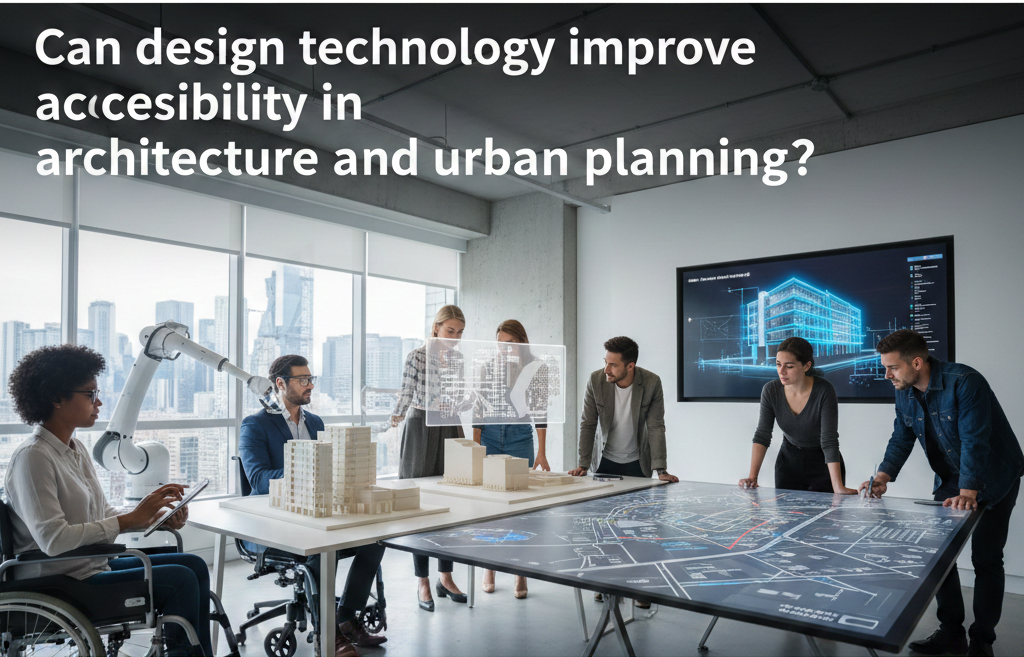
Introduction:
In this article, I’ll delve into the compelling intersection of design technology and its potential to enhance accessibility within the realms of architecture and urban planning. The built environment plays a pivotal role in shaping the quality of life for individuals of diverse abilities, and it is imperative that we explore innovative solutions to ensure equitable access for all. Traditional architectural and urban planning practices often overlook the needs of people with disabilities, limiting their participation in public spaces and infrastructure.
However, emerging technologies, such as digital modeling, 3D printing, and augmented reality, hold the promise of revolutionizing how we conceive, design, and construct buildings and cities. By harnessing the power of these tools, architects and urban planners can create more inclusive spaces, thereby fostering a society that values diversity and empowers every individual to thrive within our urban landscapes. This article will examine the various ways in which design technology can pave the way for a more accessible and inclusive future.
Design Technology Impact on Accessibility
The impact of design technology on accessibility is a topic of growing significance in the fields of architecture and urban planning. In today’s rapidly evolving technological landscape, various digital tools and applications are empowering architects, designers, and planners to re-envision the concept of accessibility in the built environment. These technologies enable a more holistic approach to design, considering not only physical but also cognitive and sensory disabilities. With the aid of software applications, architects can create 3D models and simulations that provide a comprehensive understanding of how a building or public space can be navigated by individuals with disabilities. This has not only revolutionized the way architects conceptualize their projects but has also opened new doors for enhanced collaboration with experts in accessibility design.
Furthermore, design technology allows for the rapid prototyping and iteration of designs, which is crucial in developing accessible spaces. It also facilitates the integration of data analytics to inform design decisions, taking into account factors like population demographics and evolving accessibility standards. As a result, design technology has become an invaluable asset in fostering a more inclusive and accommodating built environment. It not only streamlines the design process but also leads to cost-effective solutions for accessibility. The impact of design technology goes beyond architectural blueprints; it extends to urban planning, where digital tools are increasingly employed to create accessible and vibrant communities.
Role in Architectural Inclusivity
The role of design technology in enhancing architectural inclusivity cannot be overstated. In an era where the principles of diversity and inclusivity have gained significant recognition, architects and designers are expected to create spaces that cater to a wide spectrum of users, including those with disabilities. Design technology plays a pivotal role in making this vision a reality. It offers architects the tools and insights required to develop structures that are not only aesthetically pleasing but also functional and accommodating to everyone.
One of the key aspects of design technology’s role in architectural inclusivity is the ability to create accurate and detailed 3D models of buildings and public spaces. These models serve as virtual prototypes that can be tested for accessibility and usability before the actual construction begins. Architects can simulate the experience of individuals with different types of disabilities, including mobility impairments, visual or auditory impairments, and cognitive disabilities. This empowers them to make informed design decisions, such as the placement of ramps, elevators, accessible signage, and the overall layout of spaces to ensure barrier-free movement.
Moreover, design technology offers solutions that make architectural inclusivity an integral part of the design process rather than a retrofit. Through software applications, architects can easily incorporate accessible features from the initial stages, considering the specific needs of individuals with disabilities. This proactive approach not only aligns with ethical and legal requirements but also fosters a sense of social responsibility among architects and the wider design community. In essence, design technology acts as a bridge between architectural creativity and inclusivity, ensuring that the built environment becomes more welcoming, accommodating, and equitable for all.
Urban Planning Enhancement Through Tech
Urban planning is another domain where design technology plays a crucial role in enhancing accessibility. As cities continue to grow and evolve, the need for well-planned, inclusive urban spaces becomes increasingly important. Design technology offers urban planners a set of tools and strategies to create cities that are accessible and navigable for everyone, regardless of their physical or cognitive abilities.
Digital mapping and Geographic Information Systems (GIS) are invaluable components of urban planning enhanced by technology. These tools allow planners to map out the city’s infrastructure, including transportation systems, public spaces, and housing, in intricate detail. By overlaying accessibility data, planners can identify areas where improvements are needed. This enables the development of barrier-free pathways, the placement of accessible public transportation stops, and the identification of locations suitable for community facilities that cater to individuals with disabilities.
Additionally, technology aids in community engagement and collaboration. Planners can utilize digital platforms and interactive tools to gather input from the public, including people with disabilities, to understand their specific needs and preferences. This participatory approach ensures that urban plans reflect the voices and requirements of all community members. Furthermore, urban planning technology allows for the efficient analysis of population data and demographics, helping planners anticipate future accessibility needs in a city.
Overall, design technology plays a pivotal role in urban planning by providing data-driven insights and facilitating the creation of accessible and sustainable urban environments. It enables the development of cities where every individual, regardless of their abilities, can participate fully in economic, social, and cultural life.
Digital Modeling for Inclusive Design
Digital modeling is a powerful tool for architects and urban planners aiming to create more inclusive environments. It allows for the creation of detailed, three-dimensional representations of buildings and spaces, which can be used to assess and refine designs with accessibility in mind. This process is not only cost-effective but also time-efficient, as it enables the identification of potential barriers and obstacles early in the design phase. By incorporating digital modeling, designers can visualize how individuals with disabilities will navigate and interact within a space, ensuring that accessibility is integrated from the outset.
Furthermore, digital modeling can simulate the experience of users with different types of disabilities. This enables designers to gain a comprehensive understanding of the challenges individuals with mobility impairments, visual or auditory impairments, or cognitive disabilities might encounter. It also aids in the fine-tuning of design elements, such as the placement of handrails, the height of countertops, and the arrangement of fixtures, to ensure they meet accessibility standards. Digital modeling is, therefore, a vital tool for architects and planners striving to create spaces that are universally usable.
Additionally, these digital models can serve as valuable resources for collaboration between designers, accessibility experts, and stakeholders. They provide a common visual reference that fosters discussion and innovation in the pursuit of inclusive design. Through the use of digital modeling, architects and urban planners can align their creative vision with the principles of accessibility, resulting in built environments that are not only functional but also aesthetically appealing and welcoming to all.
3D Printing for Accessible Structures
3D printing technology has emerged as a game-changer in the realm of accessibility in architecture and urban planning. It offers innovative solutions for creating customized, accessible structures and components. By utilizing 3D printing, architects and planners can produce intricate and tailor-made designs that cater to the unique needs of individuals with disabilities.
One of the key advantages of 3D printing is its ability to produce complex geometries, which is often necessary to design components that are ergonomic and comfortable for users with disabilities. For example, custom-made handrails, prosthetic limb sockets, or even specialized tactile maps can be 3D printed to perfection. This technology allows for the precise adjustment of dimensions, textures, and shapes to ensure optimal functionality and comfort for those who require accessible features.
Additionally, 3D printing offers rapid prototyping, reducing the time and cost associated with creating custom accessibility solutions. This means that architects and planners can quickly iterate and fine-tune designs to better meet the needs of users. Furthermore, 3D printing promotes sustainability by minimizing material waste, making it an eco-friendly option for designing accessible structures.
Incorporating 3D printing into the field of accessibility not only enables the creation of highly personalized and effective solutions but also aligns with the principles of universal design, where products and spaces are developed to be usable by as many people as possible, regardless of their abilities.
Augmented Reality in Planning
Augmented reality (AR) technology has become an influential tool in urban planning and architecture for enhancing accessibility. AR overlays digital information onto the real-world environment, providing planners, architects, and individuals with a unique perspective on accessibility in the built environment.
In urban planning, AR can be used to visualize and assess the potential impact of accessibility improvements in real-time. For instance, planners can use AR to visualize proposed changes in infrastructure, such as adding accessible ramps or elevators to public buildings. This allows them to evaluate the practicality of these modifications and their impact on the surrounding environment before any construction work begins.
For architecture, AR is beneficial in designing accessible buildings. Architects can use AR applications to project designs into physical spaces, enabling them to see how accessible features like doorways, corridors, and restrooms will fit into the actual building. This provides an opportunity to make real-time adjustments to ensure that these features meet accessibility standards while maintaining the aesthetics and functionality of the space.
Moreover, AR has the potential to enhance wayfinding and navigation for people with disabilities. AR applications can provide auditory or visual cues to help users locate accessible entrances, elevators, and other facilities in public spaces. This assists individuals with mobility challenges and those with visual or auditory impairments in navigating their environment more independently.
Empowering Individuals in Urban Spaces
Design technology not only empowers architects and planners but also individuals with disabilities in urban spaces. It facilitates the creation of smart and accessible cities that enable people to interact more seamlessly with their surroundings.
Digital navigation tools and smartphone applications are essential components of this empowerment. These apps provide real-time information on accessible routes, transportation options, and the availability of accessible facilities. They help individuals with disabilities plan their journeys and make informed decisions about how to move around the city efficiently. Moreover, these applications can offer personalized information, such as accessible restaurant recommendations or information about the availability of accessible restrooms in public areas.
Furthermore, technology-driven urban infrastructure, such as smart traffic lights and pedestrian signals, can prioritize safety and convenience for individuals with disabilities. For example, crosswalks with accessible pedestrian signals can provide audible cues to help visually impaired individuals safely navigate intersections. These elements make the urban environment more inclusive and ensure that people with disabilities can participate fully in community life.
Accessible public information systems are another area where technology empowers individuals with disabilities. Digital signage, interactive kiosks, and public announcements can offer multiple communication channels, including tactile or auditory options, to ensure that people with diverse abilities can access critical information easily.
Toward an Inclusive Built Environment
In conclusion, the convergence of design technology and accessibility in architecture and urban planning represents a significant step toward the realization of a more inclusive built environment. These advancements in technology have the potential to transform the way we design, build, and plan our cities and structures, ensuring that they are welcoming and functional for all individuals, regardless of their physical or cognitive abilities.
Design technology, including digital modeling and 3D printing, facilitates the creation of inclusive designs from the outset, allowing for the efficient integration of accessible features and reducing the need for costly retrofits. Augmented reality offers real-time insights and visualization, enabling planners and architects to make informed decisions that enhance accessibility. Furthermore, technology empowers individuals with disabilities in urban spaces by providing navigation tools and accessible information systems.
As we continue to embrace and refine these technologies, we move closer to a future where inclusivity and accessibility are not just buzzwords but fundamental principles that guide the planning and development of our cities and architecture. The synergy between design technology and accessibility ensures that the built environment becomes a space where everyone can thrive, participate, and experience the full spectrum of opportunities and experiences that urban living has to offer.
Conclusion:
I hope the exploration of how design technology can improve accessibility in architecture and urban planning has shed light on the transformative potential of these innovations. From digital modeling and 3D printing to augmented reality and the empowerment of individuals in urban spaces, technology has emerged as a driving force in creating more inclusive environments.
The journey towards a more accessible built environment is not without challenges, but design technology equips us with the tools to surmount these obstacles efficiently and creatively. It enables architects and urban planners to visualize, plan, and implement accessibility features seamlessly, often at a lower cost and with a greater degree of precision. Furthermore, these technologies empower individuals with disabilities to navigate urban spaces independently and confidently.
In an era that increasingly values diversity and inclusion, design technology serves as a beacon of progress, guiding us toward a future where architecture and urban planning are inherently equitable, accessible, and welcoming to all. The synergy of technology and accessibility principles promises to reshape our cities and structures into spaces where everyone can thrive, participate, and contribute to the tapestry of urban life.