
Introduction:
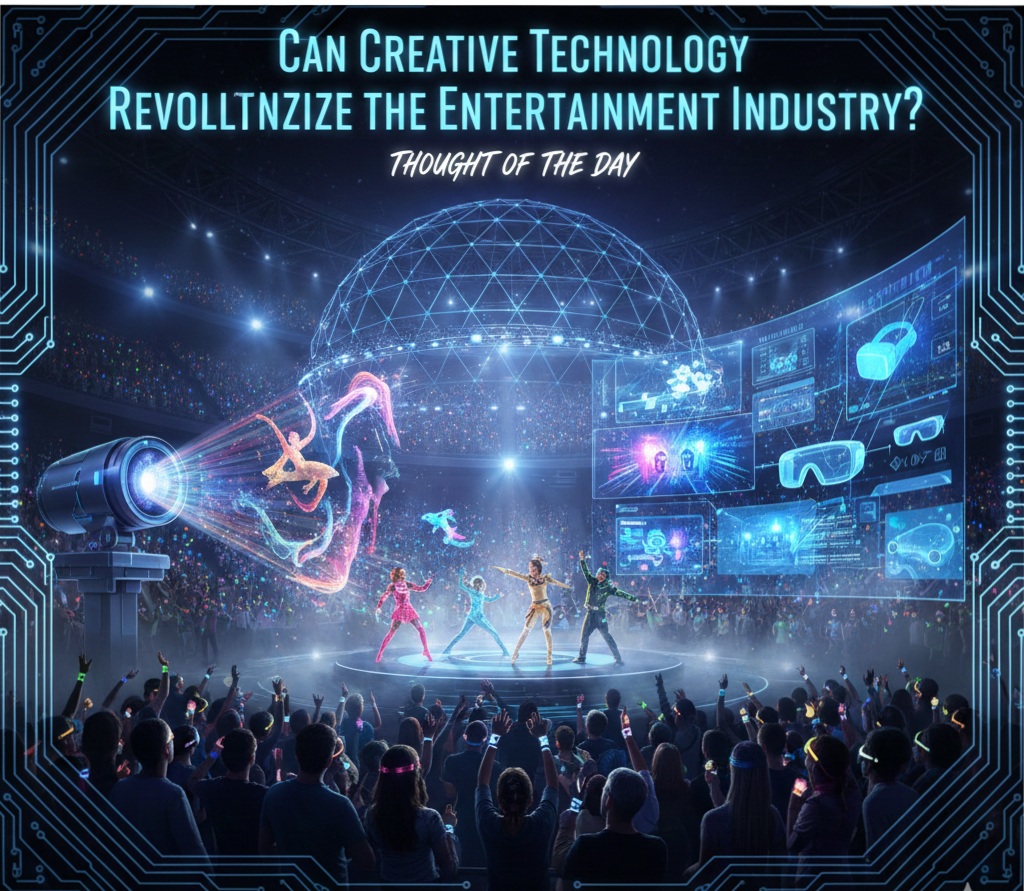
In this article, I’ll explore the captivating intersection of creativity and technology, delving into the intriguing question: Can Creative Technology Revolutionize the Entertainment Industry? The entertainment sector has always been a dynamic realm, evolving with the advent of new technologies and innovative ideas. Yet, in recent years, we have witnessed an unprecedented fusion of artistic ingenuity and cutting-edge technology, giving birth to a transformative force that has the potential to reshape the way we experience entertainment.
From immersive virtual reality experiences that transport audiences to fantastical realms, to AI-driven content recommendation systems that anticipate our preferences, creative technology is pushing the boundaries of what is possible in the world of entertainment. We’ll examine the manifold ways in which creative technology is already making waves, the challenges it faces, and the profound impact it might have on the future of entertainment. Join us on this journey through the digital frontier, where imagination and innovation converge to reshape the very fabric of the entertainment industry.
Transformative Potential:
The transformative potential of creative technology within the entertainment industry is nothing short of revolutionary. As advancements in technology continue to accelerate, the possibilities for creating and delivering entertainment experiences have expanded exponentially. Creative technology encompasses a wide array of tools and techniques, including virtual reality (VR), augmented reality (AR), artificial intelligence (AI), machine learning, and more. These innovations are not merely complementary to the entertainment industry; they have the power to redefine it entirely.
One of the most significant aspects of this transformative potential is the ability to engage audiences on a profound level. For instance, VR and AR technologies transport viewers to entirely new worlds, allowing them to interact with stories in ways that were previously unimaginable. With VR, users can step into the shoes of characters, explore virtual landscapes, and become active participants in the narrative. This level of immersion fosters a deeper emotional connection between the audience and the content, making storytelling more impactful and memorable.
Moreover, the transformative potential of creative technology extends beyond the content itself. Distribution methods have also evolved with the advent of streaming platforms and digital delivery. The convenience and accessibility of content have improved significantly, reaching audiences worldwide in an instant. Furthermore, data analytics and AI-driven content recommendations enhance personalization, tailoring the entertainment experience to individual preferences. This not only satisfies viewers but also drives engagement and revenue for the industry.
Fusion of Creativity and Tech:
The fusion of creativity and technology is the very heart of the entertainment industry’s evolution. This synergy allows creators to push the boundaries of imagination and craft experiences that were once thought to be the stuff of science fiction. Creative technology empowers artists, filmmakers, musicians, and content producers to experiment with novel forms of expression and storytelling. It offers an unprecedented canvas upon which they can paint their narratives.
In this dynamic fusion, filmmakers can use advanced CGI (Computer-Generated Imagery) to bring fantastical creatures and epic battles to life. Musicians can blend virtual instruments with live performances to create otherworldly soundscapes. Video game designers can craft intricate and immersive environments where players’ choices shape the story. In short, the possibilities for creative expression are limitless.
This fusion is not limited to content creation but extends to marketing and promotion as well. Innovative campaigns, such as using AR filters or interactive social media experiences, harness the power of technology to engage with audiences on a whole new level. This approach blurs the lines between art and advertising, enabling creators to reach their target demographic more effectively.
Evolving Entertainment Landscape:
The entertainment landscape is in a constant state of evolution, and creative technology is a driving force behind these shifts. Traditional entertainment forms, such as cable television and physical media, are being challenged by new digital and interactive mediums. The widespread adoption of high-speed internet and the proliferation of smart devices have paved the way for this transformation.
Streaming services like Netflix, Disney+, and Amazon Prime Video have disrupted the traditional broadcast model by offering on-demand content. Users can access a vast library of movies, TV shows, and documentaries at their convenience, eliminating the need for scheduled programming. Moreover, the rise of user-generated content platforms, such as YouTube and TikTok, has empowered individuals to become content creators themselves, democratizing the entertainment landscape.
Simultaneously, the video game industry, fueled by creative technology, has grown to rival and even surpass traditional entertainment sectors. Online multiplayer games, e-sports, and virtual worlds have become dominant forces in the entertainment sphere. Virtual concerts and live events, once reserved for physical venues, are now hosted within digital realms, reaching global audiences. These developments reflect an evolving landscape where consumers have more choices, greater control, and immersive experiences.
The entertainment industry’s evolution is not limited to how content is consumed but also extends to the nature of content itself. The episodic format, which was once confined to television, has found its way into digital content, allowing for intricate storytelling and character development. Additionally, content is increasingly interactive, enabling users to shape narratives in real-time through choose-your-own-adventure-style experiences.
Immersive Virtual Reality Experiences:
Immersive virtual reality experiences represent one of the most profound innovations within the entertainment industry. Virtual reality (VR) technology creates computer-simulated environments that users can interact with, effectively immersing them in the content. This level of immersion provides a sense of presence that traditional media cannot match.
VR’s applications within entertainment are diverse. In gaming, it enables players to step into the shoes of their in-game characters and experience virtual worlds from a first-person perspective. This transforms the gaming experience from a mere pastime into a deeply immersive adventure. Storytelling in VR allows filmmakers to place the audience within the scenes, enabling them to look around, interact with objects, and follow the narrative at their own pace.
Beyond gaming and cinema, VR has expanded to live events, education, and therapy. Virtual concerts and events provide a new way for artists to connect with their audience, regardless of geographical boundaries. Educational institutions are using VR to create interactive learning experiences, from exploring historical sites to dissecting virtual organisms. In therapy, VR is employed to treat phobias, post-traumatic stress disorder, and other mental health conditions.
The potential for VR to revolutionize the entertainment industry lies in its ability to transport audiences to places and experiences that were previously inaccessible. It offers a level of immersion that engages the senses, making it a powerful tool for storytelling and creating memorable experiences.
AI-Driven Content Recommendations:
Artificial intelligence (AI)-driven content recommendations have become a staple of the modern entertainment industry. These systems utilize algorithms and user data to suggest content tailored to individual preferences. This personalization enhances the viewer’s experience by presenting them with shows, movies, or music that align with their interests.
The impact of AI-driven recommendations is twofold. Firstly, they help viewers discover content they might not have found otherwise. As the entertainment industry produces an ever-growing array of choices, the role of AI in curating personalized playlists and recommendations has become increasingly essential. This not only benefits the audience by exposing them to new content but also content creators and platforms, as it increases content consumption.
Secondly, AI recommendations play a pivotal role in content retention and engagement. By understanding a user’s viewing habits and preferences, AI can suggest shows or movies that are more likely to captivate the viewer. As a result, individuals spend more time engaged with the platform, increasing user satisfaction and, ultimately, platform loyalty.
AI-driven content recommendations also serve as a valuable tool for content creators and distributors. These systems provide insights into viewer behavior and preferences, enabling data-driven decisions about content creation and promotion. This data can inform casting choices, plot development, marketing strategies, and more, allowing the industry to adapt and cater to the evolving tastes of its audience.
Current Industry Impact:
The impact of creative technology on the entertainment industry is already palpable. From the way content is created and delivered to the tools used for marketing and distribution, technology has disrupted established norms. Streaming services, for example, have fundamentally changed how we consume content, moving us away from traditional cable TV and physical media.
Moreover, the prevalence of digital platforms and user-generated content has empowered individuals to become content creators themselves. Platforms like YouTube and TikTok have launched the careers of countless influencers and content producers, further diversifying the entertainment landscape.
Creative technology has also had a significant impact on storytelling. The use of CGI and advanced special effects has brought fantastical worlds and creatures to life on the big screen. Video games have evolved into immersive, interactive experiences that rival traditional forms of entertainment in popularity and profitability. Augmented reality has introduced new ways of engaging with the physical world, blending the real and the digital in unprecedented ways.
Data analytics and AI have enhanced audience engagement and monetization strategies. Subscription-based models, bolstered by AI-driven content recommendations, have become a primary revenue source for many streaming platforms. This shift from one-time purchases to ongoing subscriptions has created a steady income stream for the industry.
Technological Challenges:
Despite the promises and potential of creative technology, the entertainment industry faces several technological challenges. One of the most significant hurdles is the rapid pace of technological change itself. Keeping up with the latest developments, hardware requirements, and software updates can be demanding and costly. This challenge is particularly pertinent for smaller players in the industry who may not have the resources to continually invest in cutting-edge technology.
Interoperability is another concern. As various platforms and technologies emerge, they often come with proprietary formats and standards. This can lead to fragmentation, making it difficult for creators to reach audiences across different devices and platforms. It also complicates the process of content distribution and cross-promotion.
Additionally, privacy and ethical considerations come into play. The collection and use of user data for AI-driven recommendations raise questions about data security and user consent. Striking a balance between personalization and privacy is a delicate task, and industry stakeholders must navigate these concerns carefully.
Furthermore, ensuring content quality in the age of user-generated content presents challenges. While there are countless talented content creators, there is also a flood of amateur and low-quality content. This abundance can make it difficult for audiences to discover the gems within the vast sea of content, impacting overall user experience and content curation efforts.
Future Entertainment Revolution:
The future of the entertainment industry is poised for a revolution, driven by creative technology. As technology continues to advance, the lines between different forms of entertainment will blur further. Traditional boundaries between movies, television, video games, and virtual experiences will continue to dissipate, giving rise to new, hybrid forms of entertainment.
The development of the metaverse, a collective virtual shared space, will play a central role in this revolution. It promises to offer a seamless blend of digital and physical realities, where users can socialize, work, and engage in entertainment seamlessly. Virtual concerts, art galleries, and sporting events are just the tip of the iceberg in this emerging metaverse, where the boundaries of what constitutes ‘entertainment’ are being redefined.
AI-driven content creation is also expected to have a profound impact on the future of entertainment. Machine learning algorithms can analyze data from thousands of successful movies, books, and games to predict trends and preferences. This can streamline the creative process by assisting writers, directors, and producers in crafting content that has a higher probability of resonating with audiences.
Moreover, virtual reality is poised to become an integral part of everyday entertainment. As VR technology becomes more affordable and accessible, the potential for immersive storytelling and interactive experiences is limitless. VR films, virtual theme parks, and social virtual reality spaces will become common forms of entertainment, allowing users to step into the stories they love.
Conclusion:
I hope this exploration of the potential for creative technology to revolutionize the entertainment industry has shed light on the exciting possibilities and challenges that lie ahead. The dynamic fusion of creativity and technology is already reshaping the way we experience entertainment. From immersive virtual reality experiences that transport us to new realms to AI-driven content recommendations that enhance personalization, the impact is undeniable.
As we navigate the evolving entertainment landscape, we must acknowledge the transformative potential and the hurdles that come with it. Technological challenges, including keeping pace with rapid advancements and addressing issues of interoperability and privacy, demand our attention. The industry must strike a balance between harnessing the power of creative technology and ensuring ethical and quality standards.
Looking to the future, we stand on the cusp of an entertainment revolution, driven by the metaverse, AI-driven content creation, and the widespread adoption of virtual reality. These innovations promise to redefine the very essence of entertainment, making it more immersive, interactive, and personal than ever before. In a world where the boundaries between reality and digital experiences continue to blur, creative technology will undoubtedly play a central role in shaping the entertainment landscape of tomorrow.