
Introduction:
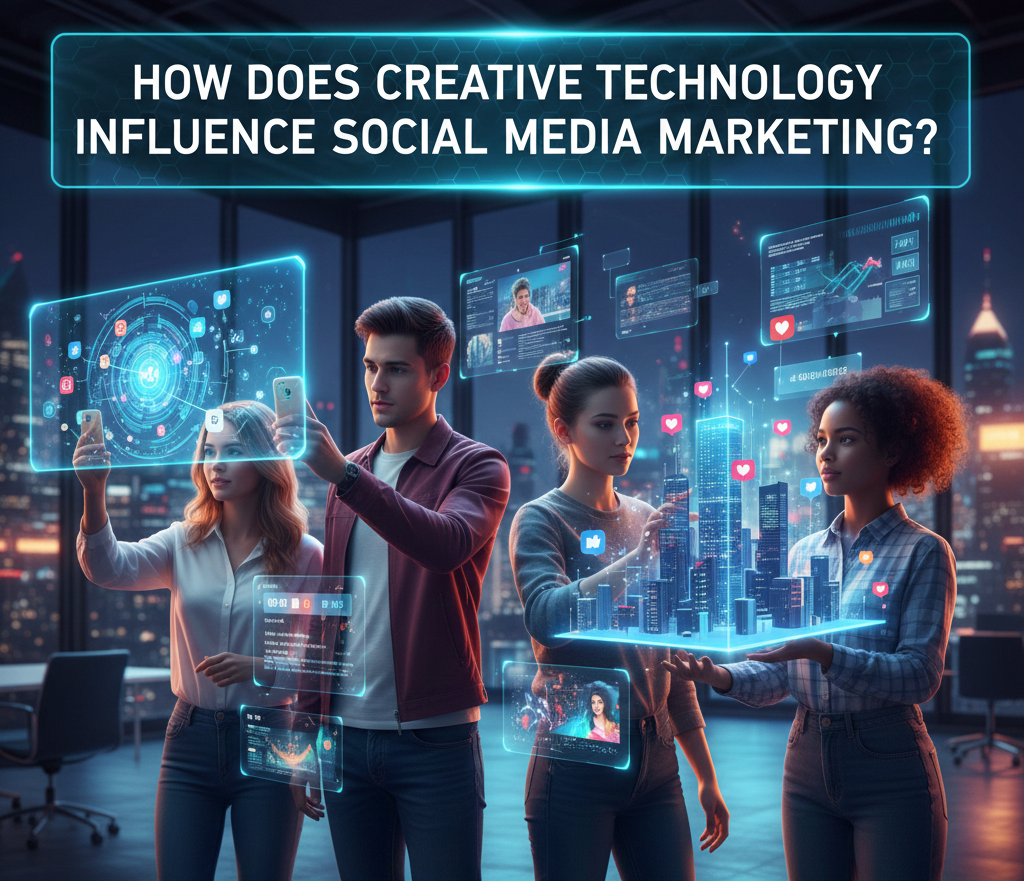
In this article, I’ll explore the dynamic intersection of creative technology and its profound impact on the realm of social media marketing. The digital landscape is constantly evolving, and as technology continues to advance at an unprecedented pace, it has ushered in a new era of marketing strategies and consumer engagement. Creative technology encompasses a wide spectrum of innovative tools and techniques, from augmented reality and virtual reality to interactive content, data analytics, and beyond.
Social media platforms have become the primary battleground for businesses and brands vying for consumer attention, and they are increasingly relying on creative technology to stand out in a crowded online space. By harnessing the power of creativity and technology, marketers can craft compelling narratives, develop immersive brand experiences, and connect with their target audiences on a deeper level. This article delves into the transformative influence of creative technology, shedding light on the ways it shapes the landscape of social media marketing and offering valuable insights for businesses seeking to thrive in this digital age.
Creative Technology Definition
In the realm of social media marketing, understanding the fundamental concept of creative technology is paramount. Creative technology refers to the fusion of artistic innovation and technological prowess, where imaginative ideas are harnessed and brought to life through cutting-edge digital tools and platforms. It embodies the dynamic synergy between creativity and technology, enabling marketers to craft compelling narratives, interactive experiences, and visually stunning content. Creative technology encompasses a wide spectrum of innovations, such as video editing software, graphic design tools, 3D modeling, augmented reality (AR), and much more. It’s a driving force behind the ever-evolving landscape of social media marketing, empowering brands to captivate their audiences in new and exciting ways.
The adoption of creative technology in social media marketing has revolutionized the industry by allowing businesses to break free from traditional advertising constraints. With the democratization of tools like video editing software and graphic design platforms, even small enterprises can produce high-quality, visually appealing content that was once reserved for large corporations with substantial budgets. Creative technology has broadened the horizons of storytelling and brand expression, enabling marketers to transcend text-based content and leverage multimedia elements to engage audiences on a deeper level. This technological infusion not only enhances the aesthetic quality of marketing materials but also paves the way for more interactive and personalized campaigns, thus reshaping the entire landscape of social media marketing.
Furthermore, creative technology is not static; it’s a constantly evolving field. As new technological advancements emerge, so do the possibilities for creative expression in marketing. For instance, the integration of artificial intelligence (AI) and machine learning has opened up opportunities for data-driven, personalized marketing approaches, ensuring that content is not only visually appealing but also highly relevant to individual consumers. In summary, the definition of creative technology in social media marketing is one of dynamic innovation, where the marriage of creativity and technology results in enhanced storytelling, more engaging content, and an evolving landscape that continues to redefine the boundaries of brand marketing.
Evolving Digital Landscape
The digital landscape within which social media marketing operates is in a state of constant flux, shaped by various factors that include changing user behaviors, emerging platforms, and evolving technological trends. This ever-evolving environment poses both challenges and opportunities for marketers seeking to leverage creative technology to its fullest extent. With the advent of new social media platforms, shifting demographics, and alterations in user preferences, the landscape is characterized by a state of perpetual transformation.
One of the key factors contributing to the evolving digital landscape is the proliferation of social media platforms. The rise and fall of platforms can significantly impact marketing strategies. For example, the emergence of TikTok as a prominent platform for short-form video content has forced marketers to adapt and develop new strategies that resonate with its predominantly younger user base. Likewise, the decline of platforms like MySpace or Google+ demonstrates the importance of staying attuned to user trends and shifting resources accordingly.
User behavior is another critical aspect of the evolving digital landscape. As technology advances, so do user expectations. People now demand more interactive, personalized, and immersive content experiences. They are increasingly inclined to engage with brands that can provide such experiences. This shift necessitates the integration of creative technology to create captivating and responsive content, such as interactive infographics, augmented reality filters, and chatbots for instant customer support.
Furthermore, the advent of new technologies, such as 5G and augmented reality (AR), is reshaping the digital landscape in unprecedented ways. The speed and capabilities offered by 5G networks allow for seamless streaming of high-definition content and the widespread adoption of AR applications, opening up new avenues for marketing innovation. Marketers need to be agile and ready to incorporate these technologies into their strategies to maintain relevance in the digital space.
Innovative Tools and Techniques
In the context of social media marketing, innovative tools and techniques empowered by creative technology are the driving force behind successful campaigns. This category encompasses a wide range of digital instruments, software applications, and strategies that enable marketers to captivate audiences, analyze data, and optimize their marketing efforts. These tools and techniques are pivotal in ensuring that marketing campaigns stay relevant and effective in the rapidly changing digital landscape.
Video editing software is one of the fundamental tools that has reshaped the social media marketing landscape. Platforms like Adobe Premiere Pro, Final Cut Pro, and DaVinci Resolve have become essential for creating engaging video content. Marketers can manipulate visuals, add effects, and craft compelling narratives with these tools, resulting in content that stands out on platforms like YouTube, Instagram, and TikTok. The use of video editing software allows for the creation of professional-quality videos, even with limited resources.
Graphic design tools like Adobe Photoshop and Canva are equally indispensable for crafting visually appealing content. They enable the creation of stunning graphics, infographics, and promotional material that catch the eye of social media users. These tools democratize design, making it accessible to businesses of all sizes. The versatility of graphic design software empowers marketers to experiment with different styles and formats, enhancing their brand’s visual identity.
Augmented reality (AR) is an innovative technique that has gained prominence in recent years. AR allows marketers to overlay digital elements onto the real world through the screens of users’ devices. For instance, Snapchat filters and Pokémon GO are prime examples of AR marketing applications. This interactive and engaging technology lets brands create immersive experiences for their audiences, driving user engagement and brand recognition.
These are just a few examples of the innovative tools and techniques that have transformed social media marketing. In a landscape characterized by intense competition and fleeting user attention, mastering these tools and techniques is crucial for creating compelling, attention-grabbing content. Creative technology provides marketers with the means to stand out in a crowded digital space, sparking the creativity needed to connect with their target audience effectively.
Augmented Reality’s Impact
Augmented reality (AR) has emerged as a transformative force in social media marketing, significantly altering the way brands engage with their audiences. AR technology blends the digital and physical worlds, overlaying computer-generated content onto the real environment viewed through a screen, such as a smartphone or smart glasses. This revolutionary technology has enabled marketers to create immersive and interactive experiences, providing an engaging platform for storytelling.
One of the most prominent uses of AR in social media marketing is through the implementation of AR filters and lenses. Platforms like Snapchat and Instagram have embraced AR filters, allowing users to modify their appearances with fun and creative effects. Brands have capitalized on this feature to create branded filters that users can apply, promoting brand recognition and user-generated content. For example, cosmetic companies often offer AR makeup try-on filters, allowing users to virtually try their products before making a purchase.
Another impactful application of AR in marketing is location-based AR experiences. Brands can use geolocation data to trigger AR content when users are near a specific physical location. For instance, a restaurant might use AR to offer a virtual tour of its menu items when users walk by its storefront. This not only captures attention but also encourages foot traffic and real-world engagement with the brand.
Furthermore, AR is evolving beyond mobile devices with the advent of AR glasses, providing even more opportunities for marketers. These glasses allow users to access AR information hands-free, providing an immersive and dynamic means of experiencing marketing content. For instance, while shopping, users can receive product information, reviews, and discounts via AR glasses, revolutionizing the retail experience.
Virtual Reality’s Influence
Virtual reality (VR) has also left its mark on social media marketing, offering marketers the opportunity to transport users to entirely new and immersive environments. VR technology creates a simulated reality that can be explored through specialized headsets, allowing users to experience content in a more profound and immersive way. In the marketing realm, VR has introduced exciting possibilities for brands to captivate their audiences by placing them at the center of compelling narratives and experiences.
One of the primary applications of VR in social media marketing is the creation of virtual tours. Real estate agencies, travel companies, and event organizers, for instance, have adopted VR to provide users with immersive property walkthroughs, destination previews, or event experiences. This allows potential customers to explore and experience a place or event as if they were physically present, which is especially valuable when physical attendance is not possible.
Moreover, VR has proven to be a powerful tool for storytelling. Brands can use VR to craft narratives that unfold around the user, providing a highly engaging and memorable experience. For instance, a sports brand might create a VR experience where users can step into the shoes of their favorite athlete, experiencing the thrill of a championship game from the athlete’s perspective. Such immersive experiences not only entertain but also leave a lasting impression on users, enhancing brand engagement and recall.
While VR adoption in social media marketing is growing, it’s worth noting that it presents some challenges, particularly the need for specialized hardware. As VR headsets become more affordable and accessible, the adoption of VR in marketing is expected to rise, providing brands with an innovative means of captivating audiences and building stronger connections.
Interactive Content’s Role
Interactive content has become a cornerstone of modern social media marketing, thanks to its ability to actively engage users, hold their attention, and generate valuable data. This type of content transforms the passive scrolling experience into an interactive and participatory one, making users feel involved and invested in the brand’s message.
One common form of interactive content is quizzes and polls. These bite-sized, user-friendly tools allow brands to gauge user preferences and opinions while providing a fun and engaging experience. For instance, a fashion brand may create a “Style Quiz” to help users discover their fashion preferences, with the added benefit of collecting data on user preferences for future targeting.
Another type of interactive content gaining popularity is 360-degree videos and images. These immersive experiences allow users to explore a scene from different angles, providing a sense of agency and immersion. For instance, travel companies may offer 360-degree videos of their destinations, allowing users to virtually explore the location before booking a trip.
Live streaming has also become a prominent form of interactive content on social media. Brands can host live events, Q&A sessions, product launches, or behind-the-scenes tours in real-time, allowing users to interact with the brand and ask questions. Live streaming fosters a sense of community and immediacy, making users feel connected to the brand and its message.
Interactive content is not only engaging but also highly shareable. Users are more likely to share content they actively engage with, which can significantly extend the reach of a brand’s message. Additionally, the data collected from user interactions with this content can inform future marketing strategies and content development, making it a valuable tool for marketers.
Data Analytics Applications
Data analytics applications are at the core of effective social media marketing campaigns driven by creative technology. The ability to collect, analyze, and interpret data allows marketers to make informed decisions, refine their strategies, and achieve better outcomes. From tracking user behavior to measuring the impact of marketing efforts, data analytics provides valuable insights that are essential for optimizing social media campaigns.
One key application of data analytics in social media marketing is the measurement of engagement metrics. Marketers can track metrics such as likes, shares, comments, and click-through rates to assess the effectiveness of their content. By analyzing these metrics, brands can identify what type of content resonates most with their audience, enabling them to tailor their future campaigns for better engagement.
Additionally, data analytics plays a crucial role in audience segmentation. Marketers can utilize data to segment their audience into specific groups based on demographics, interests, and behaviors. This segmentation allows for highly targeted and personalized content, ensuring that the right message reaches the right audience at the right time.
Another significant use of data analytics is in tracking the customer journey. Marketers can trace a user’s interactions with a brand from initial awareness to conversion. This information helps brands understand the effectiveness of their marketing funnel and identify areas for improvement. By pinpointing where users drop off or convert, marketers can refine their strategies to enhance the customer journey.
Furthermore, data analytics applications extend to social media advertising. Marketers can optimize ad campaigns by analyzing data on ad performance, audience engagement, and conversion rates. This data-driven approach ensures that advertising budgets are allocated effectively, resulting in higher ROI for ad spend.
Enhancing Brand Engagement
The ultimate goal of any social media marketing effort is to enhance brand engagement – the depth and quality of the connection between the brand and its audience. Creative technology plays a pivotal role in achieving this objective by providing tools and strategies that captivate users, create meaningful interactions, and foster lasting relationships between brands and consumers.
One of the ways creative technology enhances brand engagement is through storytelling. With multimedia elements like videos, animations, and immersive experiences, brands can tell compelling stories that resonate with their audience on a profound level. These stories go beyond mere advertising; they connect with users emotionally and intellectually, creating a bond that goes beyond a transactional relationship.
In addition to storytelling, interactive content has a profound impact on brand engagement. Quizzes, polls, contests, and user-generated content initiatives encourage users to actively participate, making them feel involved with the brand’s message. When users are engaged in such interactive experiences, they are more likely to remember and form positive associations with the brand.
Moreover, personalization, enabled by data analytics and creative technology, is a key driver of brand engagement. By delivering content tailored to the individual user’s preferences, needs, and behaviors, brands create a sense of value and relevance. This, in turn, fosters a stronger connection and loyalty from the audience.
The use of augmented reality and virtual reality experiences, as well as live streaming events, further elevates brand engagement. These technologies immerse users in memorable and dynamic experiences that leave a lasting impression. They create a sense of excitement and anticipation, drawing users closer to the brand.
Conclusion:
I hope this exploration of how creative technology influences social media marketing has shed light on the dynamic synergy between innovation and communication in the digital age. Creative technology, with its multifaceted toolkit, has fundamentally transformed the landscape of social media marketing. It has enabled brands to craft captivating narratives, engage in interactive storytelling, and foster stronger connections with their target audiences.
In a rapidly evolving digital environment, the adoption of creative technology is not merely an option but a necessity for businesses seeking to thrive. Augmented and virtual reality experiences, interactive content, and the power of data analytics have all played vital roles in redefining the boundaries of brand engagement. The digital world is a canvas where marketers can paint immersive, personalized, and memorable experiences that resonate deeply with their audience.
As we move forward, the influence of creative technology will continue to evolve, shaping the future of social media marketing in ways we can only begin to imagine. In this ever-changing landscape, embracing creative technology is the key to staying ahead, forging lasting connections, and leaving an indelible mark in the digital realm.