
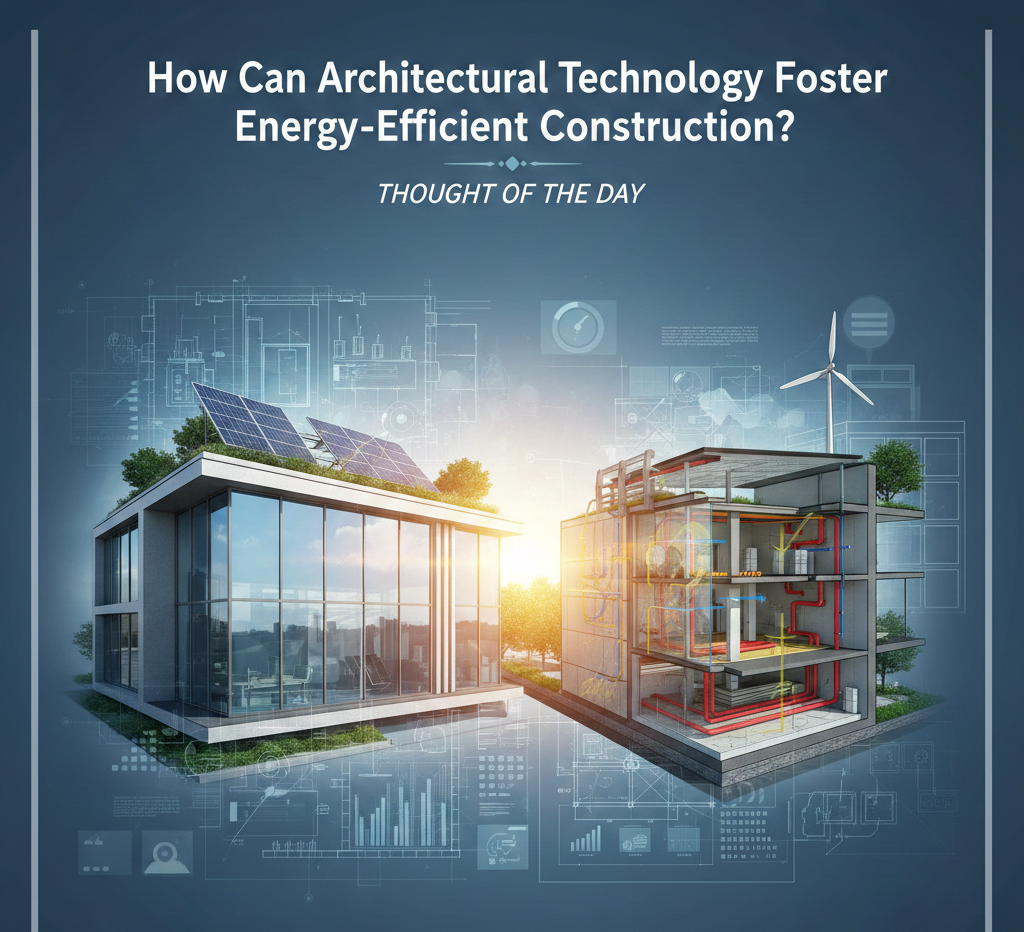
Introduction:
In this article, I’ll explore the transformative role that architectural technology plays in fostering energy-efficient construction, addressing the critical need for sustainable practices in the modern construction industry. With the ever-increasing demand for environmentally responsible building methods, architectural technology has emerged as a powerful catalyst for change. Energy efficiency is not merely a buzzword but a vital imperative for reducing carbon footprints, conserving resources, and lowering operational costs.
Architects and builders are harnessing cutting-edge tools and innovative design approaches to create structures that minimize energy consumption while maximizing comfort and functionality. From advanced modeling and simulation software to innovative materials and building techniques, we will delve into the various ways in which architectural technology is reshaping the construction landscape, making it more sustainable, eco-friendly, and economically viable. By the end of this article, you will gain valuable insights into the exciting world of energy-efficient construction and its promising future.
Innovative design and modeling tools:
In the realm of architectural technology, the integration of innovative design and modeling tools has revolutionized the way buildings are conceptualized and constructed, fostering energy-efficient solutions. With the advent of advanced software applications such as Building Information Modeling (BIM), architects can now create intricate 3D models that offer comprehensive insights into the building’s performance even before construction commences. BIM allows for the seamless collaboration of architects, engineers, and construction professionals, enabling them to identify potential energy inefficiencies and rectify them during the design phase itself. This leads to a significant reduction in costly rework and ensures that the building is optimized for energy efficiency from its very inception.
Furthermore, computer-aided design (CAD) tools have become instrumental in streamlining the design process, facilitating the creation of intricate yet practical structures that are tailored to maximize energy efficiency. Architects can experiment with various design iterations, analyzing each model’s energy consumption patterns and identifying the most efficient configurations. By leveraging these tools, architects can create complex geometries that harness natural light and ventilation, minimizing the need for artificial lighting and air conditioning. Consequently, this not only reduces the building’s energy consumption but also enhances the overall comfort and well-being of its occupants.
Moreover, the integration of virtual reality (VR) and augmented reality (AR) technologies has opened up new avenues for stakeholders to experience and visualize the building’s energy-efficient features before its actual construction. This immersive experience allows architects and clients to make informed decisions about the design elements that contribute to energy conservation, fostering a deeper understanding and appreciation of sustainable building practices. With the aid of these tools, architects can design spaces that prioritize natural light, optimize thermal comfort, and promote energy-efficient strategies, thereby establishing a strong foundation for sustainable and environmentally conscious construction practices.
This integration of innovative design and modeling tools not only facilitates efficient planning and execution but also serves as a catalyst for fostering a holistic approach to energy-efficient construction, setting new benchmarks for the industry’s sustainable development.
Sustainable material selection:
The significance of sustainable material selection in architectural technology cannot be overstated, as it forms the cornerstone of energy-efficient construction practices. Architects and builders are increasingly prioritizing the use of eco-friendly and locally sourced materials that have minimal environmental impact throughout their lifecycle. Utilizing sustainable materials such as recycled steel, bamboo, and reclaimed wood not only reduces the carbon footprint but also conserves natural resources, contributing to the overall sustainability of the construction process.
Moreover, the incorporation of high-performance building materials, such as insulated concrete forms (ICFs) and structural insulated panels (SIPs), significantly enhances a building’s energy efficiency by providing superior insulation and thermal resistance. These materials effectively reduce heat transfer, thereby minimizing the need for excessive heating or cooling, consequently leading to substantial energy savings. Additionally, the utilization of reflective and cool roofing materials aids in maintaining comfortable indoor temperatures, reducing the reliance on mechanical cooling systems during warmer seasons.
Furthermore, architects are exploring the potential of biodegradable and energy-efficient materials such as green concrete, which significantly lowers the embodied energy and carbon footprint of the building. The integration of these sustainable materials not only ensures reduced energy consumption during the construction phase but also enhances the building’s overall energy performance and durability, thereby fostering a more sustainable and resilient built environment.
Advanced insulation techniques:
The implementation of advanced insulation techniques in architectural technology is instrumental in reducing energy loss and maintaining optimal indoor thermal conditions, thus fostering energy-efficient construction. One such technique involves the strategic placement of insulation materials, including rigid foam, spray foam, and cellulose, within the building’s envelope to minimize heat transfer and thermal bridging. This approach effectively prevents heat loss during colder seasons and mitigates heat gain during warmer periods, thereby reducing the overall energy demand for heating and cooling.
Additionally, the integration of advanced glazing systems, such as low-emissivity (low-e) windows and insulated glass units, plays a pivotal role in enhancing a building’s energy performance. These glazing systems possess superior thermal insulation properties, effectively minimizing heat transfer while allowing natural light to penetrate the interior spaces. By optimizing natural light utilization and reducing the need for artificial lighting, these advanced glazing solutions contribute to significant energy savings and create a more sustainable and visually comfortable indoor environment.
Furthermore, architects are exploring the potential of innovative insulation materials, including aerogels and vacuum insulation panels (VIPs), which offer superior thermal resistance while being lightweight and space-efficient. The integration of these cutting-edge insulation materials allows for the creation of high-performance building envelopes that effectively regulate indoor temperatures, reducing the dependency on mechanical heating and cooling systems and consequently decreasing energy consumption.
Passive solar design principles:
Passive solar design principles represent a fundamental aspect of architectural technology in promoting energy-efficient construction. Architects are increasingly harnessing the power of nature to heat, cool, and light buildings without relying extensively on mechanical systems. Passive solar design involves the strategic orientation and layout of a building to leverage the sun’s energy for heating during the winter and to provide shade during the summer. This approach minimizes the need for artificial heating and cooling, contributing significantly to energy efficiency.
Architects consider factors such as the building’s solar orientation, window placement, and thermal mass to optimize passive solar heating. South-facing windows capture and store heat, while well-insulated materials release it slowly, ensuring a comfortable interior temperature throughout the day and night. In contrast, the design also incorporates shading elements and natural ventilation to prevent overheating in the summer months.
Furthermore, passive solar design principles extend to daylighting strategies that prioritize the use of natural light. By strategically placing windows and using reflective surfaces, architects reduce the need for artificial lighting. This not only lowers energy consumption but also creates visually pleasing and healthier indoor spaces.
In essence, passive solar design principles showcase how architectural technology can seamlessly integrate with natural phenomena to foster energy-efficient construction, emphasizing the importance of sustainability and eco-conscious building practices.
Smart building automation systems:
The incorporation of smart building automation systems represents a pivotal advancement in architectural technology, revolutionizing the way buildings operate and consume energy. These systems, often referred to as the Internet of Things (IoT) in the context of buildings, connect various building components and systems, such as lighting, HVAC, security, and energy management, to a centralized control platform. This connectivity allows for real-time monitoring, analysis, and optimization of a building’s energy usage.
Smart building automation systems use sensors and data analytics to adapt to the building’s needs and occupants’ behaviors. For instance, occupancy sensors can adjust lighting and HVAC settings in unoccupied spaces, reducing unnecessary energy consumption. Additionally, these systems can utilize weather forecasts and historical data to make proactive adjustments, such as optimizing heating or cooling systems based on anticipated weather conditions.
Moreover, smart building automation systems facilitate remote monitoring and control, enabling facility managers to make informed decisions and adjustments in real-time. This ensures that energy efficiency remains a priority, and issues can be addressed promptly, further reducing energy wastage.
Efficient HVAC and lighting systems:
Efficient Heating, Ventilation, and Air Conditioning (HVAC) and lighting systems are paramount in achieving energy-efficient construction. Architects are turning to technologically advanced HVAC systems that are not only energy-efficient but also provide precise temperature and humidity control. Variable refrigerant flow (VRF) systems, for example, adjust the amount of refrigerant circulated based on the building’s heating and cooling needs, reducing energy consumption. High-efficiency air-source and ground-source heat pumps are also gaining popularity for their ability to provide consistent thermal comfort while minimizing energy usage.
In parallel, energy-efficient lighting systems are integral to architectural technology’s role in fostering sustainability. LED lighting, known for its long lifespan and low energy consumption, has become the standard in energy-efficient illumination. Architects and designers use advanced lighting controls, such as dimmers and sensors, to optimize light levels and turn off lighting in unoccupied areas. The integration of daylight harvesting systems ensures that natural light is maximized, reducing reliance on artificial lighting during the day.
Energy-efficient HVAC and lighting systems work in tandem to create a building environment that is not only eco-conscious but also economically beneficial, as reduced energy consumption leads to lower operational costs.
Green roofing and landscaping:
The utilization of green roofing and landscaping practices plays a vital role in enhancing the energy efficiency of buildings. Green roofs, often covered with vegetation, provide numerous benefits. They act as a natural insulator, reducing heat gain in the summer and heat loss in the winter. This insulation effect leads to less reliance on HVAC systems, lowering energy consumption. Additionally, green roofs mitigate stormwater runoff and contribute to improved air quality.
Architects and builders also incorporate sustainable landscaping in their designs, which involves the selection of native and drought-resistant plants. These plants require less water and maintenance, reducing the energy and resources needed for landscape upkeep. Furthermore, strategically placed trees and shrubs can provide shade to the building, reducing cooling demands during hot weather.
Renewable energy integration:
Architectural technology is at the forefront of integrating renewable energy sources into building design, contributing significantly to energy-efficient construction. Solar panels, or photovoltaic (PV) systems, are a prime example. Architects now consider the orientation and layout of a building to optimize solar panel placement, maximizing energy generation. Solar energy not only reduces a building’s reliance on the grid but can also generate surplus electricity, contributing to a more sustainable energy ecosystem.
In addition to solar power, architects explore other renewable sources, such as wind turbines and geothermal systems. These technologies can harness energy from the environment, reducing the building’s reliance on fossil fuels and conventional energy sources.
Furthermore, energy storage solutions, such as batteries, are integrated into the building’s infrastructure to store excess energy generated from renewables. This stored energy can be used during peak demand periods, further reducing reliance on the grid and ensuring a consistent power supply.
The integration of renewable energy sources into architectural technology is a testament to the industry’s commitment to reducing its carbon footprint and embracing sustainable practices, ultimately fostering energy-efficient construction and a more eco-conscious built environment.
Conclusion:
I hope this exploration of how architectural technology fosters energy-efficient construction has shed light on the transformative power of innovation in the field of architecture and building design. Throughout this discussion, we have delved into the remarkable ways in which cutting-edge tools, sustainable materials, and intelligent design principles are reshaping the construction landscape, with a strong focus on environmental sustainability.
Architectural technology is more than just a catalyst for energy efficiency; it represents a commitment to a greener and more sustainable future. From innovative modeling software to renewable energy integration, it’s evident that architects and builders are continually pushing the boundaries of what’s possible, reducing energy consumption, and minimizing environmental impact.
As we move forward, it’s imperative that the principles and practices discussed here become integral to the architectural ethos. By doing so, we can build a world where energy-efficient construction is the standard, not the exception, ensuring a brighter, cleaner, and more sustainable future for generations to come.