
Introduction:
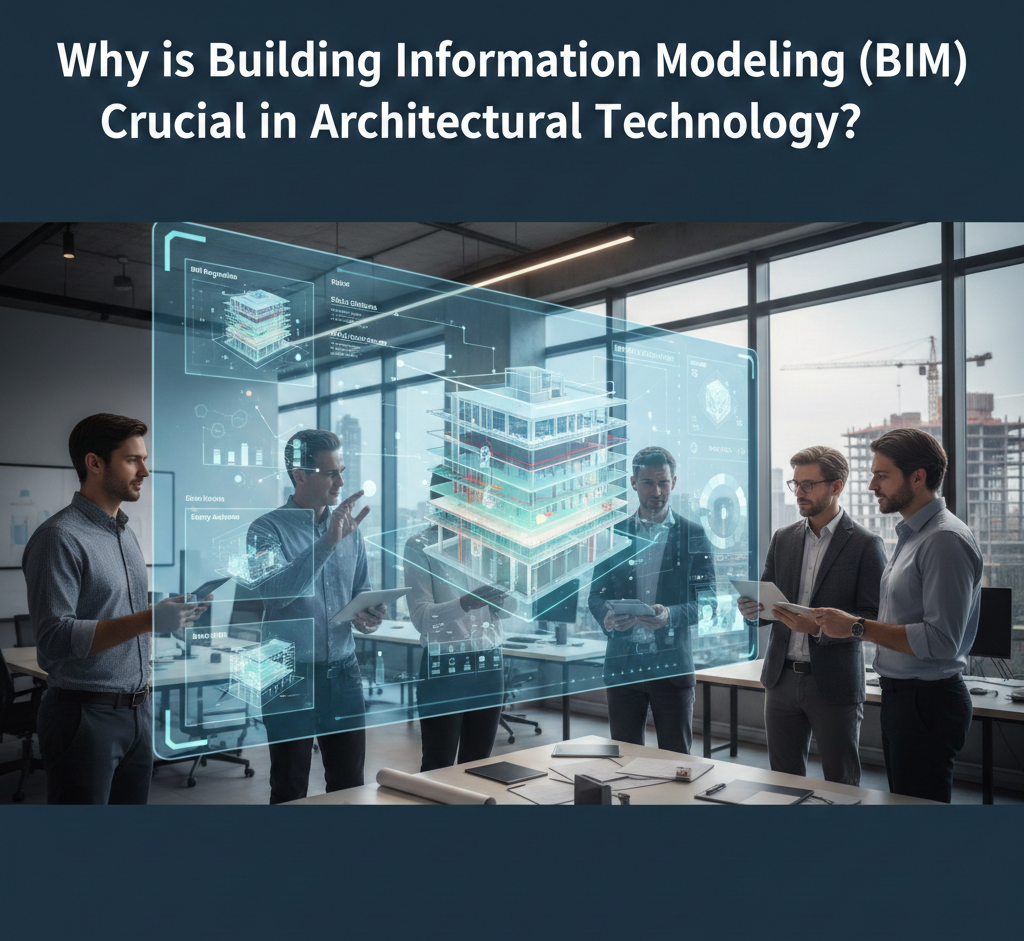
In this article, I’ll delve into the pivotal role of Building Information Modeling (BIM) in the realm of Architectural Technology. BIM is a revolutionary digital tool that has transformed the way architects and construction professionals design and manage building projects. It goes beyond traditional 2D blueprints, offering a three-dimensional, information-rich model of a building’s entire lifecycle, from conception to demolition.
This innovative approach fosters efficient collaboration, minimizes errors, and streamlines the construction process. BIM is not merely a technological trend; it is a fundamental paradigm shift that enhances the precision, sustainability, and overall quality of architectural projects. Through the integration of data, visualization, and simulation, BIM empowers architects to make informed decisions, optimize resource allocation, and create more sustainable and functional buildings. In an era where technology is reshaping the architectural landscape, understanding why BIM is crucial in Architectural Technology is paramount for professionals in this dynamic field.
Because BIM enhances collaboration and coordination.
Building Information Modeling (BIM) is a transformative technology that significantly enhances collaboration and coordination in architectural projects. This digital tool allows architects, engineers, contractors, and other stakeholders to work within a shared, comprehensive 3D model. This model acts as a centralized repository of project data, accessible to all parties involved. With BIM, each member of the project team can contribute to and access the same model in real-time, facilitating a high level of collaboration and coordination.
One of the key advantages of BIM in enhancing collaboration is its ability to break down traditional silos between different disciplines. In a conventional architectural project, various professionals, such as architects, structural engineers, and MEP (mechanical, electrical, plumbing) engineers, often work with separate sets of drawings and data. This can lead to miscommunication, errors, and delays. BIM, however, integrates all aspects of the design and construction process into a single model. This ensures that changes or updates made by one team are instantly reflected across the entire project, preventing discrepancies and misunderstandings.
Moreover, BIM allows for real-time collaboration, which is particularly beneficial in today’s globalized world where project teams may be distributed across different locations. Through cloud-based BIM platforms, team members can work on the same model simultaneously, no matter where they are. This feature promotes seamless communication, as issues can be addressed and resolved promptly. Overall, the collaborative and coordination benefits of BIM have a profound impact on the efficiency and success of architectural projects, leading to reduced costs, improved timelines, and higher quality outcomes.
Furthermore, BIM supports clash detection, a process that identifies conflicts or clashes between various building components before construction begins. By integrating 3D models of architectural, structural, and systems elements, BIM software can automatically detect instances where components intersect or interfere with one another. This proactive approach to conflict resolution minimizes the need for expensive on-site alterations and redesigns, thereby reducing costly errors and revisions.
Because it reduces errors and revisions.
Building Information Modeling (BIM) serves as a powerful tool for reducing errors and minimizing the need for revisions in architectural projects. Traditional 2D drawings and documentation are inherently prone to discrepancies and misinterpretations, which can result in costly mistakes and revisions during construction. BIM, on the other hand, offers a comprehensive 3D model that promotes accuracy, consistency, and clarity.
One of the primary ways BIM achieves error reduction is through its ability to visualize complex architectural elements and their interactions. In a 2D environment, it can be challenging to understand how various components fit together in a three-dimensional space. BIM, however, provides a visual representation that allows stakeholders to see the complete project from all angles. This visual clarity helps identify potential issues early in the design process, enabling proactive resolution before construction begins.
Furthermore, BIM software often includes features for clash detection and automated checking of design rules and parameters. These tools identify clashes or conflicts between different building elements and can flag design violations, such as insufficient clearances or incorrect dimensions. By pinpointing these issues in advance, BIM significantly reduces the likelihood of construction errors and the subsequent need for costly revisions.
The collaborative nature of BIM, as discussed in the previous point, also contributes to error reduction. When all project stakeholders work within the same BIM model, the risk of misunderstandings, miscommunications, and conflicting interpretations is substantially diminished. This fosters a shared understanding of the project’s design and intent, leading to a more error-free construction process.
Because it improves project visualization.
Building Information Modeling (BIM) greatly enhances project visualization in architectural technology, offering an immersive and detailed representation of a building before it is constructed. Traditional 2D blueprints and drawings can be challenging for non-technical stakeholders, such as clients and end-users, to interpret. BIM’s 3D visualizations, on the other hand, provide a more intuitive and comprehensive understanding of the project, which is instrumental in the decision-making process.
BIM enables stakeholders to explore the building in a virtual environment, allowing them to “walk through” the design and experience it as if it were already built. This virtual walkthrough, often referred to as a “flythrough” or “walkthrough,” helps clients and project team members gain a deeper appreciation of the design, its spatial layout, and the overall aesthetic. This improved understanding fosters better communication and alignment of project goals and expectations.
Additionally, BIM’s visualization capabilities extend beyond static representations. It can simulate lighting conditions, environmental impacts, and even the building’s behavior under different scenarios, such as changing weather conditions. These dynamic visualizations are invaluable for assessing the building’s performance, energy efficiency, and sustainability, empowering stakeholders to make informed decisions that lead to better project outcomes.
Moreover, BIM supports the integration of external data sources, such as geographic information systems (GIS) and real-time sensor data. This allows for a more holistic view of the project within its context, considering factors like site conditions, local climate, and the surrounding environment. The improved visualization of these contextual elements is essential in making design decisions that align with sustainability goals and regulatory requirements.
Because it aids in cost estimation.
Building Information Modeling (BIM) plays a crucial role in aiding accurate and efficient cost estimation for architectural projects. Cost estimation is a pivotal aspect of project planning, and BIM’s data-rich environment offers significant advantages in this regard.
BIM software allows for the incorporation of cost data directly into the model. Each building element, from walls and windows to mechanical systems, can be associated with relevant cost information, including material costs, labor costs, and other expenses. This level of detail provides a comprehensive basis for cost estimation that goes far beyond the capabilities of traditional 2D drawings.
With BIM, cost estimators can generate accurate and up-to-date cost assessments by simply querying the model. Any changes or modifications made to the design are instantly reflected in the cost estimates, ensuring that project stakeholders are working with the most current financial information. This real-time connection between design and cost data streamlines the budgeting process, reduces the risk of budget overruns, and enhances financial transparency.
Furthermore, BIM’s ability to analyze different design options and scenarios empowers architects and project owners to make informed decisions that balance design aspirations with budgetary constraints. By simulating cost implications for various design choices, BIM facilitates the exploration of cost-effective solutions and trade-offs, enabling project teams to align the design with budgetary expectations.
In essence, BIM’s integration of cost estimation within the modeling process provides a more accurate, efficient, and adaptable approach to managing project finances, ultimately leading to better cost control and financial predictability.
Because BIM supports sustainability initiatives.
Building Information Modeling (BIM) is a valuable ally in advancing sustainability initiatives in architectural technology. As society’s focus on environmental concerns and resource conservation intensifies, BIM provides an integrated platform that enables architects and construction professionals to design and construct more sustainable buildings.
One of the key ways in which BIM supports sustainability is through the analysis of building performance. BIM software can simulate a building’s behavior under various environmental conditions, such as solar exposure, wind patterns, and energy usage. This data-driven approach allows architects to optimize a building’s orientation, insulation, and use of renewable energy sources, leading to enhanced energy efficiency and reduced environmental impact.
Moreover, BIM facilitates the use of sustainable materials and construction methods. By associating data on materials’ environmental impact and life cycle analysis within the model, architects can make informed decisions about selecting eco-friendly building materials and construction techniques. This helps reduce a project’s carbon footprint and supports green building certifications like LEED (Leadership in Energy and Environmental Design) or BREEAM (Building Research Establishment Environmental Assessment Method).
BIM also aids in water and resource management. It can model and analyze water consumption, wastewater systems, and rainwater harvesting strategies, contributing to the efficient use of water resources in a building. Additionally, BIM can predict and mitigate construction waste, thereby reducing the amount of waste sent to landfills and promoting responsible resource management.
Because it streamlines project documentation.
Building Information Modeling (BIM) is instrumental in streamlining project documentation, a critical aspect of architectural technology. Traditional documentation processes, based on 2D drawings and paper-based records, are often cumbersome, prone to errors, and labor-intensive. BIM offers a more efficient and accurate alternative by centralizing and automating documentation tasks.
In a BIM environment, all project data, including drawings, specifications, schedules, and more, are linked to the 3D model. This interconnectivity ensures that any changes made to the model are instantly reflected in the associated documentation, eliminating the need for manual updates and revisions. This not only reduces the risk of discrepancies and errors but also saves significant time and effort.
Furthermore, BIM’s ability to generate documentation automatically is a game-changer. Architects and engineers can produce detailed construction drawings, material lists, and schedules directly from the BIM model. This automation accelerates the documentation process, allowing teams to respond swiftly to design changes and project updates.
Additionally, BIM supports version control and document management, ensuring that stakeholders are always working with the most current and accurate documentation. This real-time synchronization minimizes the confusion and delays that can result from discrepancies between different sets of documents.
BIM’s streamlined project documentation not only enhances efficiency but also reduces costs and mitigates the risk of costly construction errors arising from outdated or inconsistent documentation.
Because it enhances facility management.
Building Information Modeling (BIM) extends its value beyond the construction phase, as it serves as a powerful tool for enhancing facility management in architectural technology. Once a building is completed, its ongoing operation and maintenance are essential aspects of its lifecycle. BIM provides a digital platform for efficiently managing and maintaining facilities, optimizing their performance, and extending their lifespan.
One of the key advantages of BIM in facility management is the creation of a “digital twin” of the building. This digital twin is an accurate and up-to-date representation of the physical facility, complete with detailed information about every component, system, and asset within the building. Facility managers can use this digital twin to access critical data, such as maintenance schedules, equipment specifications, and warranty information.
BIM also supports the integration of building management systems (BMS) and computerized maintenance management systems (CMMS) into the digital twin. This integration allows for real-time monitoring of building performance, predictive maintenance, and the efficient allocation of resources. Facility managers can track energy consumption, HVAC system performance, and equipment status, making it easier to identify issues and implement timely maintenance.
In addition, BIM’s use of 3D visualization aids in facility management. Facility managers and maintenance teams can use the digital twin to navigate the building virtually, facilitating the identification of maintenance needs and simplifying the planning and execution of repairs and upgrades.
The synergy between BIM and facility management ultimately results in improved building performance, increased operational efficiency, reduced downtime, and a longer facility lifecycle, providing significant benefits for both building owners and users.
Because BIM fosters data-driven decision-making.
Building Information Modeling (BIM) plays a pivotal role in fostering data-driven decision-making in architectural technology. The vast amount of data embedded within the BIM model empowers architects, engineers, and project stakeholders to make informed choices that lead to more efficient, cost-effective, and sustainable building projects.
BIM promotes data-driven decision-making through its capacity to collect, store, and analyze diverse types of data. Within the model, information ranges from geometric data (the physical dimensions of building components) to non-geometric data (material specifications, cost estimates, and performance data). This comprehensive dataset forms the foundation for informed decision-making at all stages of the project, from design and construction to facility management.
Furthermore, BIM’s data analytics capabilities enable project teams to perform simulations and scenario analyses. For instance, architects can assess the impact of design changes on energy consumption or indoor air quality. Engineers can model structural responses under various loads and conditions. These simulations provide valuable insights that guide design and performance optimization, allowing stakeholders to evaluate trade-offs and select the most effective solutions.
BIM’s contribution to data-driven decision-making extends to sustainability goals as well. By assessing the environmental impact of design choices and materials, architects can make choices that align with sustainability objectives, regulatory requirements, and the reduction of carbon emissions.
Conclusion:
I hope this exploration of Building Information Modeling (BIM) in the context of architectural technology has shed light on its pivotal significance. BIM has evolved into an indispensable tool that transcends conventional design and construction methods. In a world where collaboration and efficiency are paramount, BIM offers architects, engineers, contractors, and stakeholders an integrated platform that enhances collaboration, minimizes errors, streamlines documentation, and aids in cost estimation.
Its power to visualize complex projects, support sustainability, enhance facility management, and foster data-driven decision-making underscores its transformative potential. BIM is not merely a technological trend; it represents a paradigm shift that aligns architectural technology with the demands of modern construction, offering both professionals and the environment substantial benefits. Its continued integration into architectural practice ensures that buildings are not only beautifully designed but also efficiently built and environmentally conscious, marking BIM as a cornerstone of architectural innovation and progress.